Keeping Floors and Carpet Right Through a Michigan Winter
Winter doesn't stay outside. It rides in on boots, and your floors take the hit.
October 27, 2026 · 4 min read
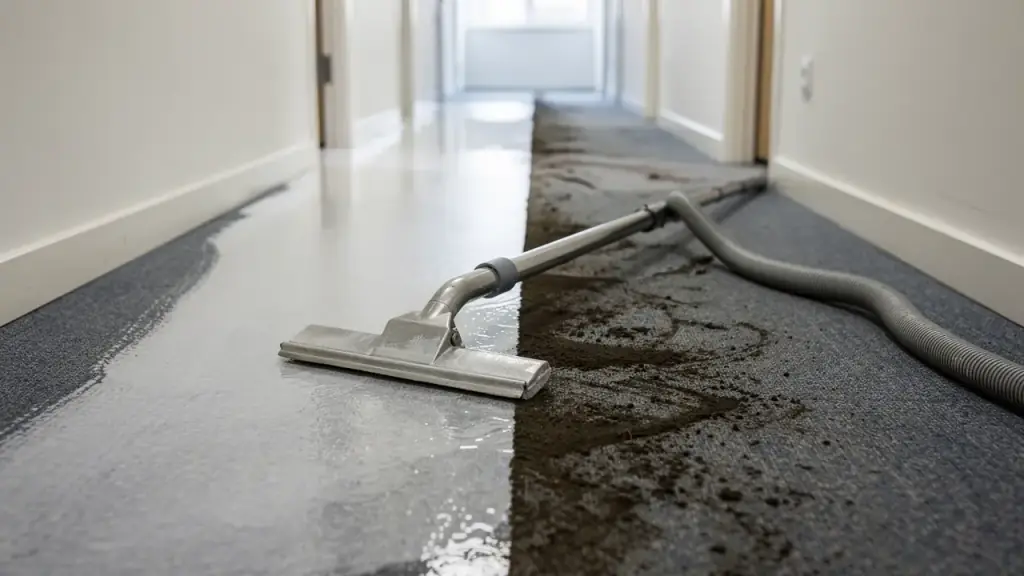
Every winter, the same thing happens in commercial buildings across southeast Michigan. Road salt, melting slush and sand arrive on the soles of every visitor and settle into the first twenty feet of your floor. By February, the entrance looks tired no matter how often someone wipes it. The good news is that most of the damage is predictable, and a small set of habits keeps it from turning permanent.
What winter actually does to a floor
Salt is the main villain. On hard floors, it dries into a pale, chalky film that dulls the finish and leaves visible tracks. The sand and grit that come with it act like sandpaper underfoot, scratching surfaces a little more with every step. Wet boots add a slip risk on smooth tile and polished concrete, which is a safety concern as well as a cosmetic one.
On carpet, the pattern is different. Fine grit works its way down into the fibers and wears them from the inside, while salt residue draws in moisture and dirt so the traffic lanes darken faster. Carpet in a busy corridor can look fine on a Monday and obviously stained by Friday, simply because the same narrow path takes all the foot traffic.
Stop it at the door
The cheapest cleaning you'll ever do is the cleaning you prevent. Good entrance matting is the first line of defense, and the rule of thumb is that longer is better. Three or four steps of matting pulls off most of what's on a shoe, while a small doormat catches almost nothing. Place one mat outside to scrape and another inside to absorb, and keep them sized to the doorway.
Matting only works while it's clean. A saturated, salt-caked mat stops absorbing and starts spreading the problem, so it needs to be vacuumed, shaken out or swapped regularly during the worst weeks. Ask your cleaner to include mats on the routine checklist, and don't be shy about asking for extra attention to the entrance during the heavy months.
Daily care for hard floors
On tile, vinyl and sealed concrete, the daily job is removing grit before it gets ground in. A dust mop or sweep comes first, then a damp mop with the right cleaner. Skipping the sweep and going straight to the mop turns sand into a gritty slurry that scratches as it dries.
Change the mop water often in winter. Salty water re-deposits the same film you're trying to remove, which is why a floor can look cleaner right after mopping and cloudy once it dries. Frequent rinsing, and a final pass with clean water at the entrance, keeps the haze down. Periodic deeper floor work, like scrubbing and recoating where the finish allows, resets the surface when everyday mopping stops being enough.
Carpet needs vacuuming first, extraction second
For carpet, vacuuming is the single most valuable task, and it matters more in winter than any other season. Grit that stays in the pile cuts fibers every time someone walks over it. Frequent, thorough passes in traffic lanes and at the entrance remove it before it does that damage. A building with heavy foot traffic often benefits from vacuuming at every visit.
Deep cleaning is the second layer. Hot-water extraction pulls out the residue that vacuuming can't, including salt, and most commercial carpets benefit from it periodically, with the timing depending on traffic. Many facilities schedule one in late winter or early spring, once the salt season winds down, so the stored-up residue doesn't sit in the fibers all year. Walk-off lanes and entrances may need it more often than low-traffic rooms.
One thing to avoid is over-wetting. Carpet that's soaked and not dried promptly can develop odor and stay damp longer than it should. If you're hiring someone for extraction, ask how they control moisture and how long the floor will take to dry, and plan the visit for a time when the area can stay clear.
What to ask your cleaner
A winter-ready plan doesn't have to be elaborate. A few questions are enough to find out whether your provider has thought about it:
- Will entrances and mats get extra attention from December through March?
- Is vacuuming done before damp mopping on hard floors, every visit?
- How often are traffic lanes on carpet vacuumed, and when is deeper extraction scheduled?
- Can the plan flex up in the worst weeks and back down in spring?
ClearView Cleaners LLC in Rochester Hills offers Carpet & Floor Care as a dedicated service, covering vacuuming, mopping, sweeping and deep cleaning for both carpets and hard floors, along with flexible scheduling that can follow the season. The point is to be able to dial the effort up when the weather demands it, rather than being locked into a summer routine in January.
If your entrance already looks worn this early in the season, now is the time to set up a plan. Call (248) 952-7017 or use the quote form on the /contact page, and tell us about your floors and how much traffic they see.
ClearView Cleaners LLC, 248-952-7017
Call 248-952-7017More articles
How to Choose a Cleaning Frequency for Your Facility
The right schedule comes from how your building is used, not from its square footage.
What to Tell a Commercial Cleaner Before You Ask for a Quote
Ten minutes of detail up front is the difference between a real quote and a guess.