Restrooms and Breakrooms: The Rooms People Remember
Two small rooms do an outsized share of the work in shaping what people think of your business.
October 27, 2026 · 4 min read
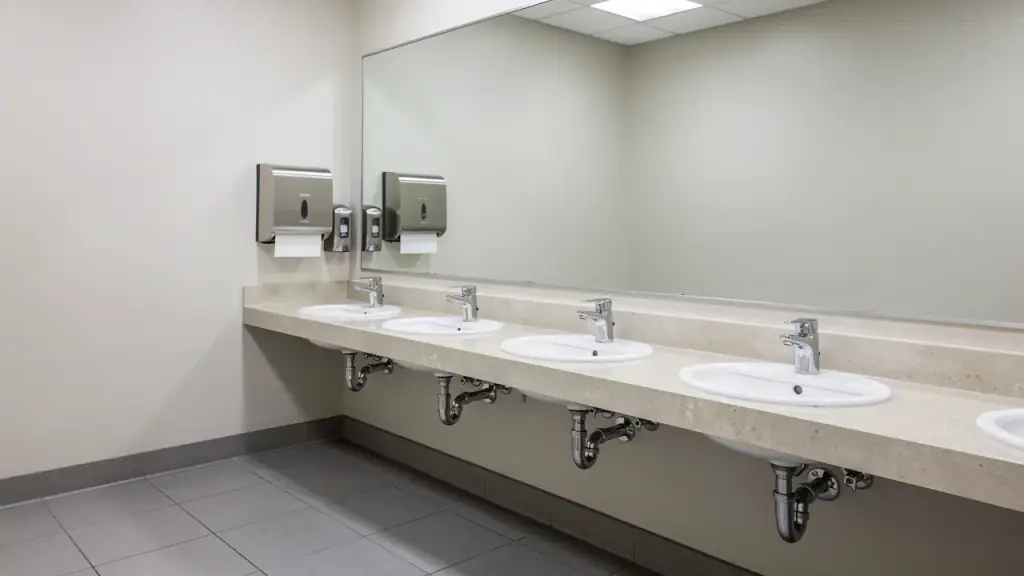
Nobody writes a thank-you note for a clean restroom. They just don't think about it. A dirty one is another story. It becomes the detail a customer mentions to a friend, the reason a candidate hesitates after an interview, and the thing your own team grumbles about by the second week. Restrooms and breakrooms are small rooms with a big influence on how people feel about a workplace.
Why these two rooms get judged so harshly
Most of a building is background. People see the lobby and their own desk, and the rest blurs together. Restrooms and breakrooms are different because they're up close and personal. You stand at the sink with nothing to do but look around. You wait for the coffee machine and notice the counter. The surfaces are touched, the air is noticed, and the details are impossible to miss.
People also treat these rooms as a window into the rest of the operation. A smudged mirror or an empty soap dispenser doesn't just mean a missed task. It suggests that somebody isn't paying attention, and visitors quietly wonder where else that's true. In a clinic or a retail shop, that inference can be expensive. In an office, it shows up in morale.
What a good restroom routine covers
A restroom is a set of surfaces that all need different handling, and the order of work matters. Cleaning top to bottom, then finishing with the floor, keeps drips and dust from undoing finished work. Disinfecting only counts when the surface has been cleaned first, because grime shields what's underneath it, so a quality routine does both in sequence rather than skipping to the spray.
Pay attention to the places that get missed. Faucet handles, flush levers, stall latches, door handles and the underside of the toilet seat see constant contact. Partition panels collect splashes. The floor around the base of each toilet and along the wall edge is where the smell lives when it lives anywhere. And the supplies matter as much as the surfaces: paper, soap, towels and liners stocked before they run out, not after.
ClearView Cleaners LLC lists Restroom Sanitation as its own service, describing thorough disinfection of sinks and toilets and stocked supplies. That pairing is the right idea. A restroom that's clean but empty of paper still fails the person standing in it.
The breakroom is a kitchen, so treat it like one
A breakroom looks casual, but it's where food, hands and shared appliances meet, and it deserves a kitchen's attention. The usual trouble spots are predictable: the microwave interior and door, the refrigerator handle, the coffee machine and its surroundings, the sink and drain, the tabletop, and the trash can that's always one lunch away from overflowing.
A daily routine does most of the work. Wipe counters and tables, clean the sink, wipe appliance exteriors and handles, empty the trash and replace the liner, and sweep and mop the floor. Weekly or monthly, someone should deal with the less visible spots: the inside of the refrigerator, the tops of cabinets, the backsplash, and the floor under the table. Those are the areas people stop seeing, and that's exactly why they get worse.
A cleaner can only do so much if the room is used carelessly, so a few house rules help. Ask staff to label and date food, clear out the fridge on a set day, and rinse their own dishes. Your cleaning provider can handle the routine, but the habits of the people using the room set the baseline it works from.
Keeping both rooms consistent
The real challenge isn't cleaning these rooms well once. It's keeping them the same every day. Restrooms and breakrooms degrade fast, often within hours of a busy morning. That's why they usually deserve the most frequent attention in any plan, even when the rest of the building only needs a lighter pass.
For a busy office, clinic or store, that often means touching these rooms several times a week at minimum, with a quick restock check in between if your staff can manage it. Smaller offices with a few users can get by on a weekly reset, as long as the routine is thorough. The honest test is simple: walk into each room after the last shift and ask whether you'd be comfortable if a client used it right now.
- Check that soap, paper towels, toilet paper and liners are stocked at every visit.
- Look at mirrors and chrome in angled light, where streaks and spots are easiest to see.
- Smell the room, not just look at it. Odor tells you what the eye missed.
- Confirm the trash is emptied and the floor is dry and clear around fixtures.
Put the standard in writing
Whatever you decide, write the standard down. A simple checklist taped inside a supply closet, or shared with your provider, removes ambiguity and gives both sides something to measure against. It also makes it easier to adjust the plan when something changes, whether that's a new hire count or a busier season.
If these two rooms are the weak spot in your building, tell us about it. Call (248) 952-7017 or send the quote form on the /contact page, and we'll talk through a restroom and breakroom routine that fits how your team and your visitors actually use the space.
ClearView Cleaners LLC, 248-952-7017
Call 248-952-7017More articles
How to Choose a Cleaning Frequency for Your Facility
The right schedule comes from how your building is used, not from its square footage.
What to Tell a Commercial Cleaner Before You Ask for a Quote
Ten minutes of detail up front is the difference between a real quote and a guess.